
Skip to content
W3 SolutionzACADEMY

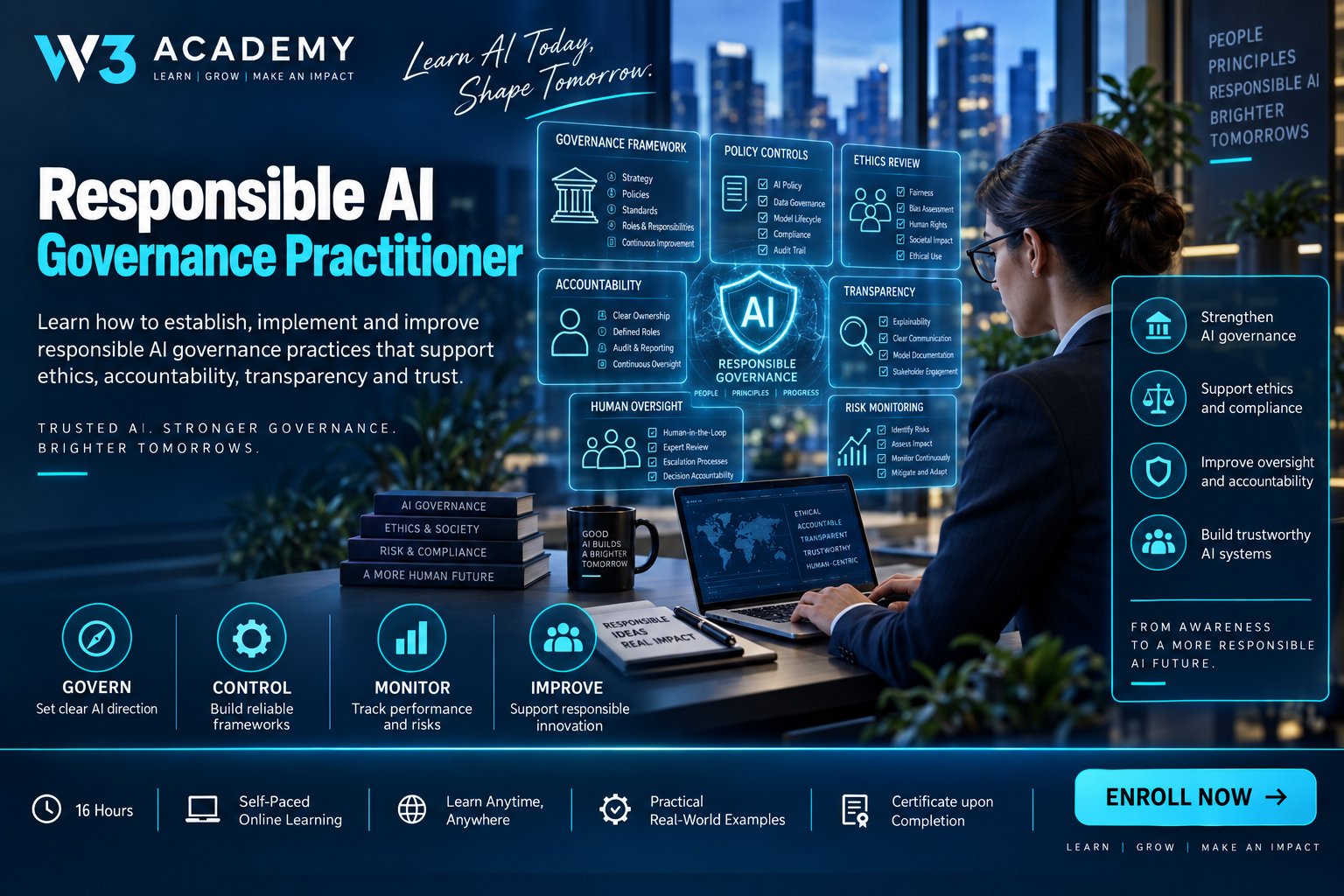
Responsible AI Governance Practitioner

Categories: AI Courses
Wishlist Share

Share this course

Help a colleague take their next step.

About Course

Build and operate responsible AI governance through a fictional three-use business portfolio. Cover decision rights, inventory, screening, policies, management systems, obligations, data, oversight, suppliers, evaluation, incidents and assurance. Includes 24 detailed lessons, worked governance records, private challenges with feedback and a 48-question final quiz.

What Will You Learn?

  • LO01: Define governance objectives, practical principles and decision authority.
  • LO02: Maintain a use inventory, proportionate screening and usable AI policies.
  • LO03: Connect AI governance to management processes, obligations and balanced objectives.
  • LO04: Specify data controls, human oversight and role-based competence evidence.
  • LO05: Make bounded supplier and release decisions using relevant evidence.
  • LO06: Design transparent service information, meaningful recourse and incident response.
  • LO07: Review changes, operating evidence and assurance findings across the lifecycle.
  • LO08: Use management review and integrated evidence to plan and improve governance.

Course Content

Governance purpose and authority
Connect principles to controls and establish accountable decision rights.

  • 01. Define the purpose of responsible AI governance
  • 02. Turn responsible AI principles into operating controls
  • 03. Assign roles, decision rights and escalation

Inventory, screening and policies
Discover AI uses, route reviews and control permitted use and exceptions.

Management system and objectives
Integrate governance, track obligations and measure meaningful outcomes.

Data, oversight and competence
Govern information, design effective human review and develop role readiness.

Suppliers, evaluation and release
Review dependencies, require suitable evaluation and operate approval gates.

Transparency, recourse and incidents
Provide accurate information, correction routes and coordinated incident handling.

Change, monitoring and assurance
Maintain approved configurations, respond to signals and test control operation.

Management decisions and implementation
Set priorities, sequence a 90-day plan and complete a portfolio decision.

Assessment

Earn a certificate

Add this certificate to your resume to demonstrate your skills & increase your chances of getting noticed.
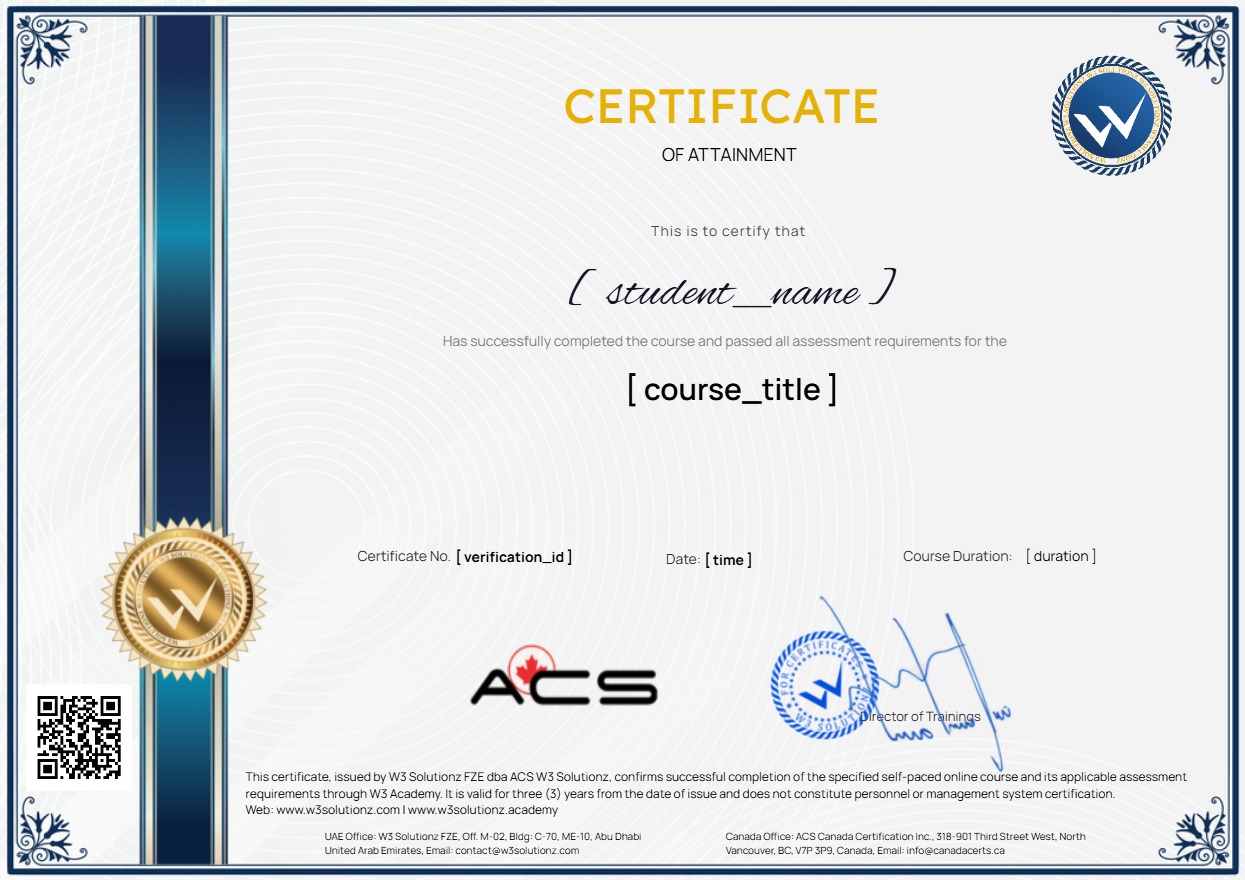
selected template

Student Ratings & Reviews

No Review Yet
No Review Yet

Want to receive push notifications for all major on-site activities?

✕