
Skip to content
W3 SolutionzACADEMY

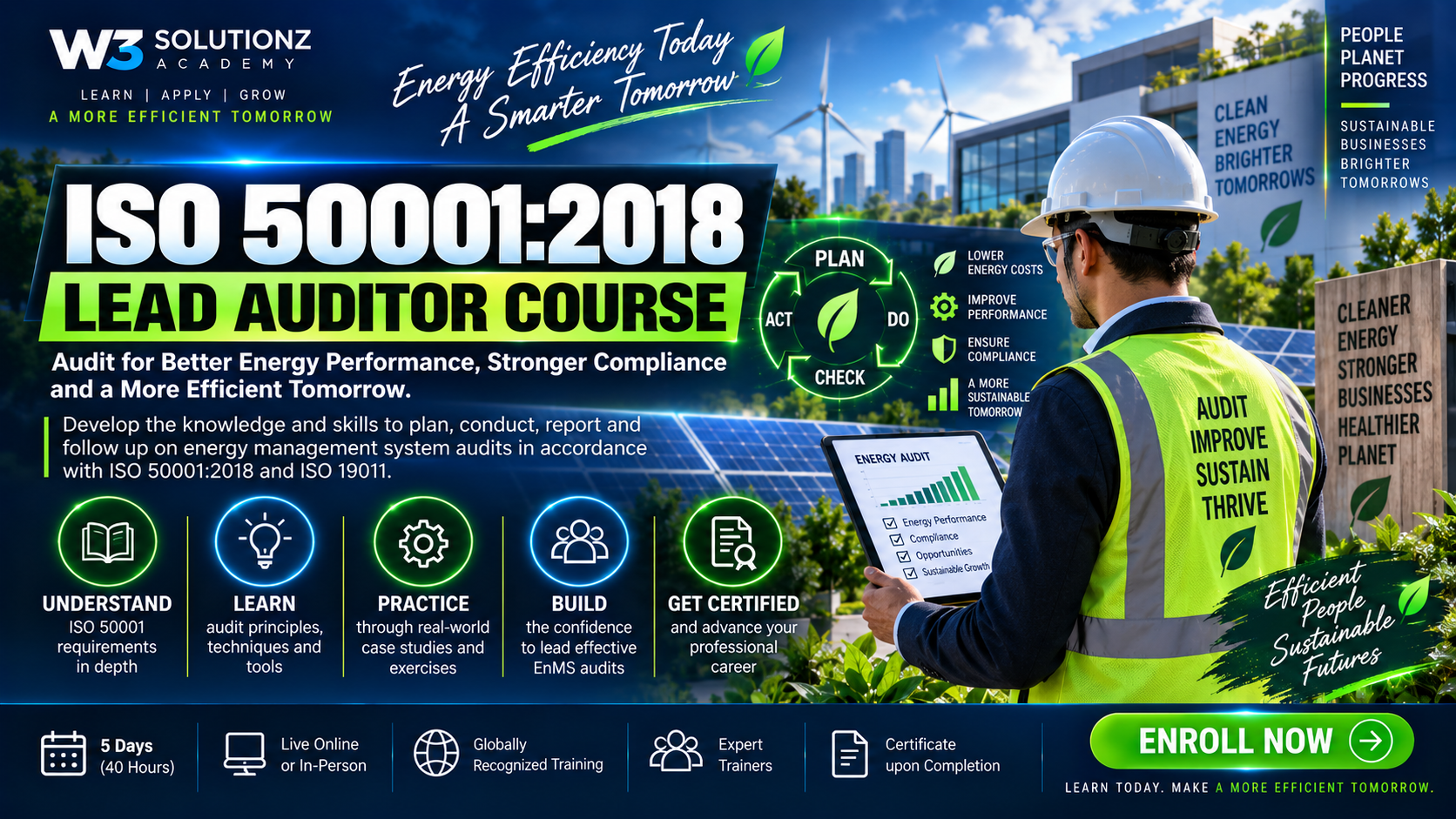
ISO 50001:2018 Lead Auditor Training

Categories: Energy Management
Wishlist Share

Share this course

Help a colleague take their next step.

About Course

40-hour energy management systems lead auditor course: 40 text lessons, seven practical written-response quizzes, five knowledge checks, 40-question final knowledge exam and four typed assignments including observed audit practice and a controlled final written assessment. Covers SEUs, EnPIs, energy baselines, normalization, data reliability, design/procurement and the applicable climate amendment. AED 999. Fictional evidence is embedded; no learner file upload required. W3 completion only; no external recognition claimed.

What Will You Learn?

  • LO01: Explain energy concepts, EnMS outcomes and audit principles
  • LO02: Evaluate context, scope, leadership, risks and energy-team responsibilities
  • LO03: Audit energy review, SEUs, EnPIs, baselines, data, support, operations, design and procurement
  • LO04: Calculate and evaluate comparable energy-performance evidence and compliance status
  • LO05: Design a risk-informed audit programme and feasible competent-team plan
  • LO06: Collect and corroborate evidence using interviews, safe observation and technical sampling
  • LO07: Lead audits, manage meetings and communicate professionally within authority
  • LO08: Write defensible findings/reports and evaluate cause-based action and effectiveness

Course Content

Energy foundations and audit principles
Energy/power, boundaries, EnMS outcomes, connected process auditing and competence.

  • EnMS purpose and the lead auditor role
  • Energy, power, efficiency and system boundaries
  • Process auditing and the PDCA chain
  • Audit principles and technical competence
  • Practical 01: Energy fundamentals and audit boundaries

Context, leadership and planning
Climate relevance, energy types, policy, the energy team, risks, targets and plans.

Energy review, SEUs, EnPIs and baselines
Reconciled energy flows, significance criteria, relevant variables, normalization and comparable improvement.

Data, support and operational control
Collection plans, reliability, competence, communication, documents and SEU/outsourced controls.

Design, procurement and evaluation
Lifetime energy decisions, deviation analysis, legal/other requirements, audits and review.

Audit programme and planning
Priorities, readiness, technical competence, feasible schedules and purposeful samples.

Evidence collection and technical judgement
Opening, interviews, safe observation, model/data limits and corroboration.

Leading and observing an EnMS audit
Team coordination, pressure/access, individual observed performance and closing.

Findings, reports and effective follow-up
Requirement-linked findings, bounded conclusions, cause/extent reviews and closure.

Advanced energy comparisons and final assessment
Technical opportunities, solar/cost distinctions, controlled final assessments and development.

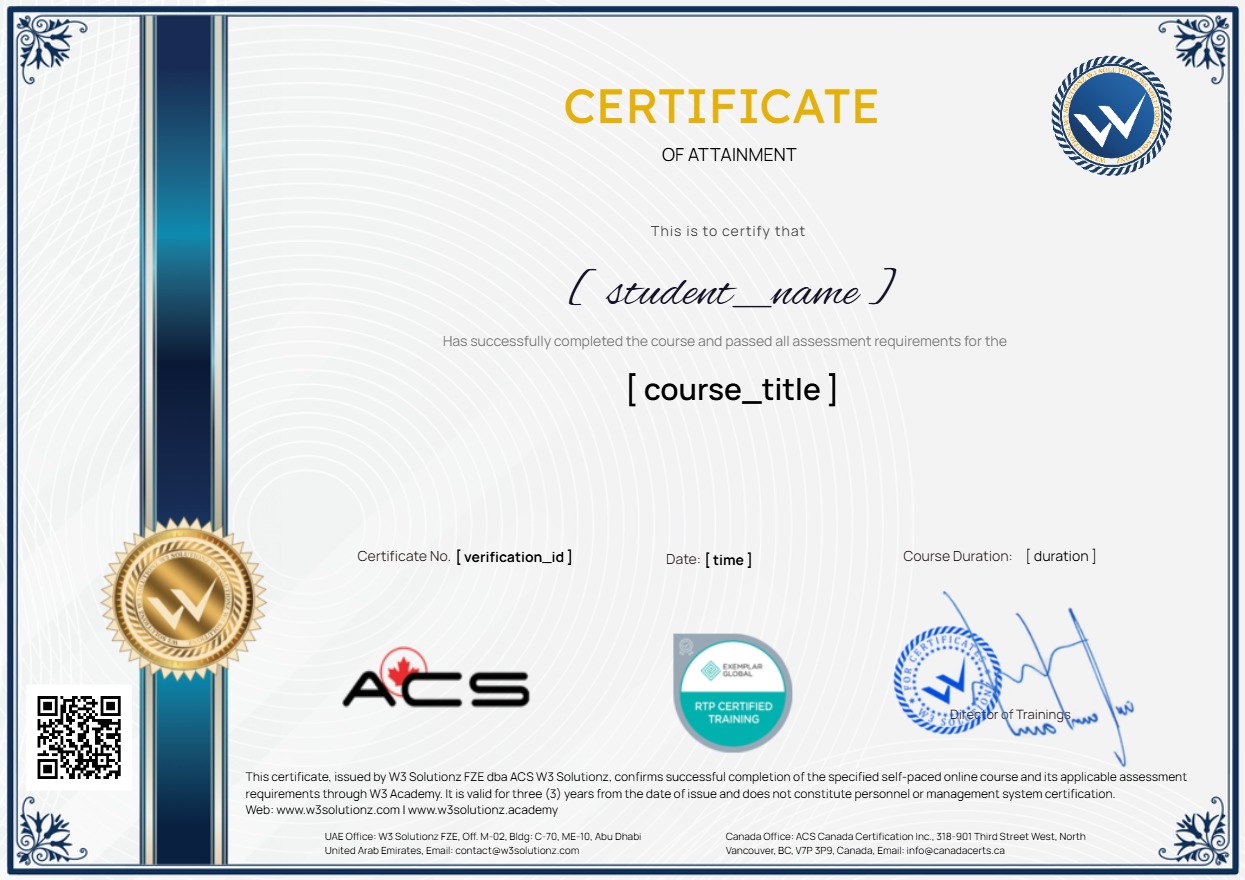
Earn a certificate

Add this certificate to your resume to demonstrate your skills & increase your chances of getting noticed.
selected template

Student Ratings & Reviews

No Review Yet
No Review Yet