Skip to content
W3 SolutionzACADEMY

ISO 50001:2018 Energy Management Systems Internal Auditor

Wishlist Share

Share this course

Help a colleague take their next step.

About Course

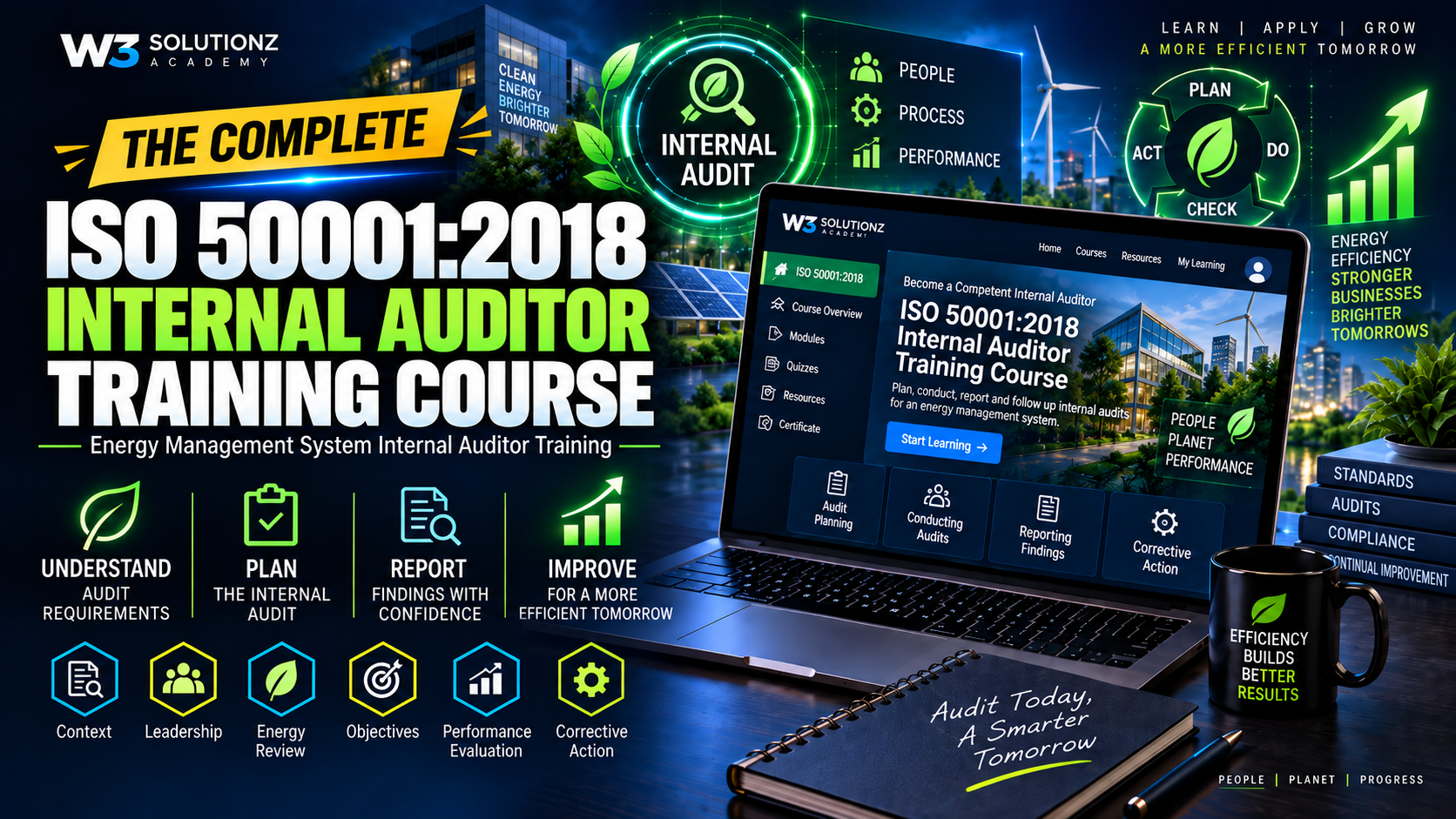
Develop energy management internal audit skills through 12 modules and 36 text lessons with exercises and model feedback. Evaluate energy reviews, significant energy uses, indicators, baselines, normalization, data quality, operational controls, design, procurement and evidence of improvement. Practise planning, sampling, safe observation, findings, reporting and corrective-action follow-up. Includes a 40-question exam and a marked practical assignment. Total workload: 14 hours excluding breaks.

What Will You Learn?

  • LO01: Explain energy performance, the EnMS and applicable audit criteria.
  • LO02: Audit boundaries, obligations, leadership, policy and responsibilities.
  • LO03: Evaluate risks, objectives, energy analysis, SEUs and improvement opportunities.
  • LO04: Evaluate EnPIs, EnBs, normalization and reliable data collection.
  • LO05: Assess resources, competence, awareness, communication and documented information.
  • LO06: Trace energy criteria through operations, design and purchasing decisions.
  • LO07: Test energy results, compliance evaluation, management review and corrective action.
  • LO08: Apply objectivity, competence and risk-based internal audit programmes.
  • LO09: Prepare audit plans, process questions and justified evidence samples.
  • LO10: Use interviews, safe observation and traceable energy evidence.
  • LO11: Write defensible findings and verify effective corrective action.
  • LO12: Complete an EnMS audit rehearsal and prepare for supervised workplace auditing.

Course Content

EnMS foundations and audit criteria
Explain energy performance, the EnMS and applicable audit criteria.

  • Course route and the internal auditor role
  • Energy performance and the management system
  • Standard, amendment and related guidance

Context, scope and leadership
Audit boundaries, obligations, leadership, policy and responsibilities.

Planning and the energy review
Evaluate risks, objectives, energy analysis, SEUs and improvement opportunities.

Indicators, baselines and energy data
Evaluate EnPIs, EnBs, normalization and reliable data collection.

Support for energy management
Assess resources, competence, awareness, communication and documented information.

Operations, design and procurement
Trace energy criteria through operations, design and purchasing decisions.

Evaluation and improvement
Test energy results, compliance evaluation, management review and corrective action.

Audit principles and programme management
Apply objectivity, competence and risk-based internal audit programmes.

Audit preparation, planning and sampling
Prepare audit plans, process questions and justified evidence samples.

Conducting the EnMS audit
Use interviews, safe observation and traceable energy evidence.

Findings, reporting and follow-up
Write defensible findings and verify effective corrective action.

Integrated practice and workplace application
Complete an EnMS audit rehearsal and prepare for supervised workplace auditing.

Assessment