
Skip to content
W3 SolutionzACADEMY

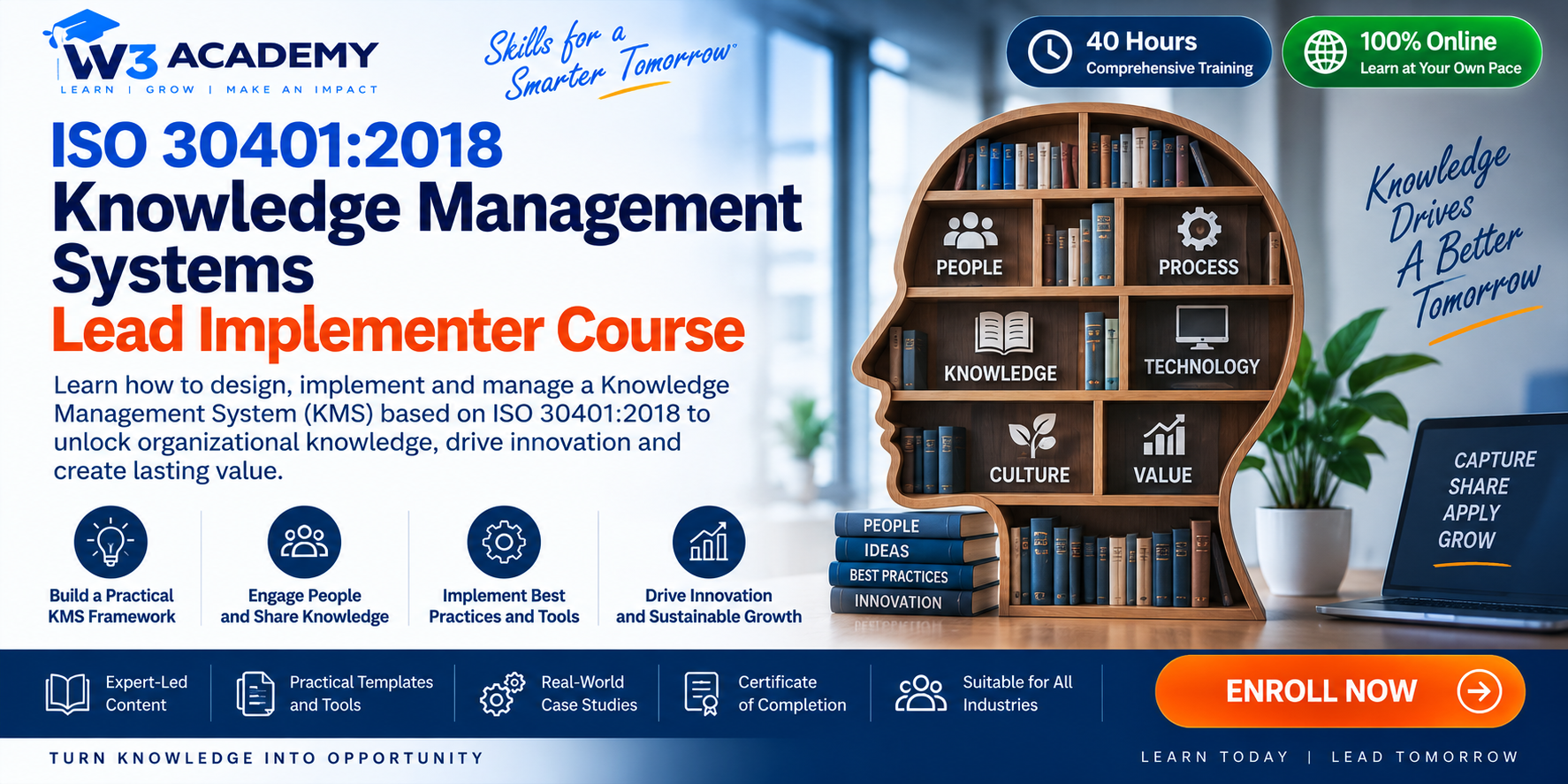
ISO 30401:2018 Knowledge Management Systems Lead Implementer

Categories: Knowledge Management
Wishlist Share

Share this course

Help a colleague take their next step.

About Course

Full 40-hour knowledge-management implementation course with 40 complete text lessons, fictional case evidence, seven written practical quizzes, five knowledge checks, a 40-question final examination and four implementation assignments, including individual observed leadership and a controlled capstone.

What Will You Learn?

  • LO01: Interpret KMS purpose, terminology, context, interested-party needs and scope.
  • LO02: Establish KM policy, accountable governance, risk actions, measurable objectives and project controls.
  • LO03: Identify critical knowledge, map knowledge flows and prioritize evidenced gaps.
  • LO04: Design ways to acquire, apply, retain and retire knowledge in priority domains.
  • LO05: Combine human interaction, representation, curation and learning to support effective use.
  • LO06: Implement roles, processes, technology, governance, culture, competence and controlled information.
  • LO07: Embed KM in business workflows and control pilots, providers, changes and adoption.
  • LO08: Evaluate KMS effectiveness and lead evidence-based management decisions.
  • LO09: Investigate failures, address causes and verify sustained improvement.
  • LO10: Deliver a resourced implementation roadmap and defend readiness and continuing ownership.

Course Content

KMS foundations, context and scope
Interpret KMS purpose, terminology, context, interested-party needs and scope.

  • Knowledge, decisions and the purpose of a KMS
  • Using ISO 30401 and its published amendments
  • Context, interested parties and climate relevance
  • Scope, boundaries and integration with other systems
  • Practical 01: KMS context, scope and requirements

Leadership, strategy and implementation planning
Establish KM policy, accountable governance, risk actions, measurable objectives and project controls.

Knowledge needs, critical domains and baseline diagnosis
Identify critical knowledge, map knowledge flows and prioritize evidenced gaps.

Knowledge development across its lifecycle
Design ways to acquire, apply, retain and retire knowledge in priority domains.

Knowledge flow, collaboration and learning
Combine human interaction, representation, curation and learning to support effective use.

Enablers, culture and support
Implement roles, processes, technology, governance, culture, competence and controlled information.

Operational integration and pilot delivery
Embed KM in business workflows and control pilots, providers, changes and adoption.

Performance, audit, review and leadership
Evaluate KMS effectiveness and lead evidence-based management decisions.

Nonconformity, corrective action and improvement
Investigate failures, address causes and verify sustained improvement.

Integrated rollout, readiness and handover
Deliver a resourced implementation roadmap and defend readiness and continuing ownership.

Earn a certificate

Add this certificate to your resume to demonstrate your skills & increase your chances of getting noticed.
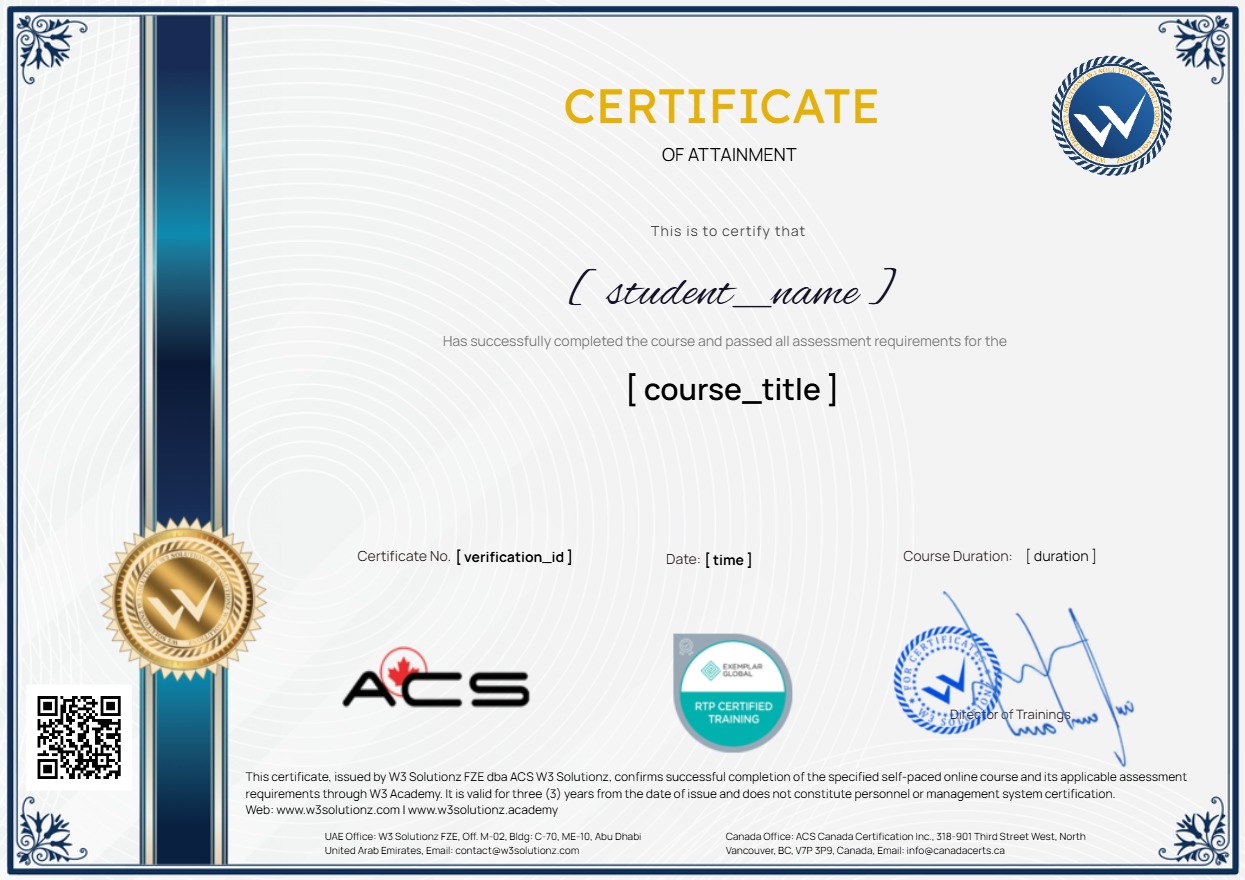
selected template

Student Ratings & Reviews

No Review Yet
No Review Yet

Want to receive push notifications for all major on-site activities?

✕