

Skip to content
W3 SolutionzACADEMY

Brand Strategy and Market Positioning

Categories: Sales & Marketing
Wishlist Share

Share this course

Help a colleague take their next step.

About Course

Northline Advisory is a fictional service business that facilitates process-documentation workshops and structured handovers for small operations teams. It is attracting unsuitable enquiries because its offer is unclear. Build a private brand strategy from diagnosis through research, positioning, messaging, customer experience and rollout. All research samples are fictional and deliberately small. Label assumptions and proposals rather than presenting them as established market facts. Use a document or spreadsheet; no design software or live campaign is required. Only the final multiple-choice quiz is assessed.

What Will You Learn?

  • LO01: Apply brand diagnosis and research through the worked cases and private practice.
  • LO02: Apply segments and competitive alternatives through the worked cases and private practice.
  • LO03: Apply positioning and proof through the worked cases and private practice.
  • LO04: Apply architecture and message system through the worked cases and private practice.
  • LO05: Apply visual expression and customer experience through the worked cases and private practice.
  • LO06: Apply measurement and rollout through the worked cases and private practice.

Course Content

Brand diagnosis and research
Brand strategy concerns the meaning customers attach to an organisation and the expectations its behaviour creates. Start with a specific business problem and desired customer understanding. Research recent decisions, language, alternatives and barriers. Ask neutral questions and distinguish observations from interpretations. Small qualitative samples are useful for discovering themes, but they do not establish how common those themes are across a whole market.

  • 01. Diagnose the brand problem before redesigning
  • 02. Conduct neutral customer research

Segments and competitive alternatives
A useful segment changes decisions about the offer, message, channel or delivery model. Evaluate customer need and ability to serve together. Competition includes doing work internally, postponing it and using a different type of solution. Compare relevant dimensions using evidence rather than inventing market positions. Record uncertainties so a perceptual map or competitor table supports further investigation instead of becoming an unsupported claim.

Positioning and proof
Positioning connects the intended audience, its task, the category of offer and a meaningful distinction. A value proposition explains the benefit and why it is credible. Separate features, benefits and evidence. A process description supports a claim about how work is done, but does not automatically prove a quantified improvement. Check that every important promise matches the organisation’s actual capability and available evidence.

Architecture and message system
Brand architecture clarifies the relationship between the provider and its offers. A descriptive offer name may be sufficient where a separate identity creates unnecessary confusion. A message system defines the core promise, supporting benefits, proof and action. Voice describes consistent communication characteristics; tone adapts to the situation. Use concrete sentence examples so staff can apply the guidance across channels.

Visual expression and customer experience
Visual identity should express the strategy and work in everyday applications. A clear brief is more valuable than choosing colours without a purpose. Test legibility and the factual implications of badges or symbols. The customer experience must then deliver the promise through observable standards. A promise of clarity, reliability or responsiveness needs an operational definition, ownership and a way to review performance.

Measurement and rollout
Choose measures that test the intended customer understanding and business effect. Distinguish awareness, clarity, credibility, consideration and conversion. Use consistent questions and comparable populations for changes over time. Report small samples with their limitations. Rollout should coordinate customer touchpoints and staff behaviour, with owners and dependencies. Preserve useful brand assets and change the parts that evidence shows are causing confusion.

Assessment

Earn a certificate

Add this certificate to your resume to demonstrate your skills & increase your chances of getting noticed.
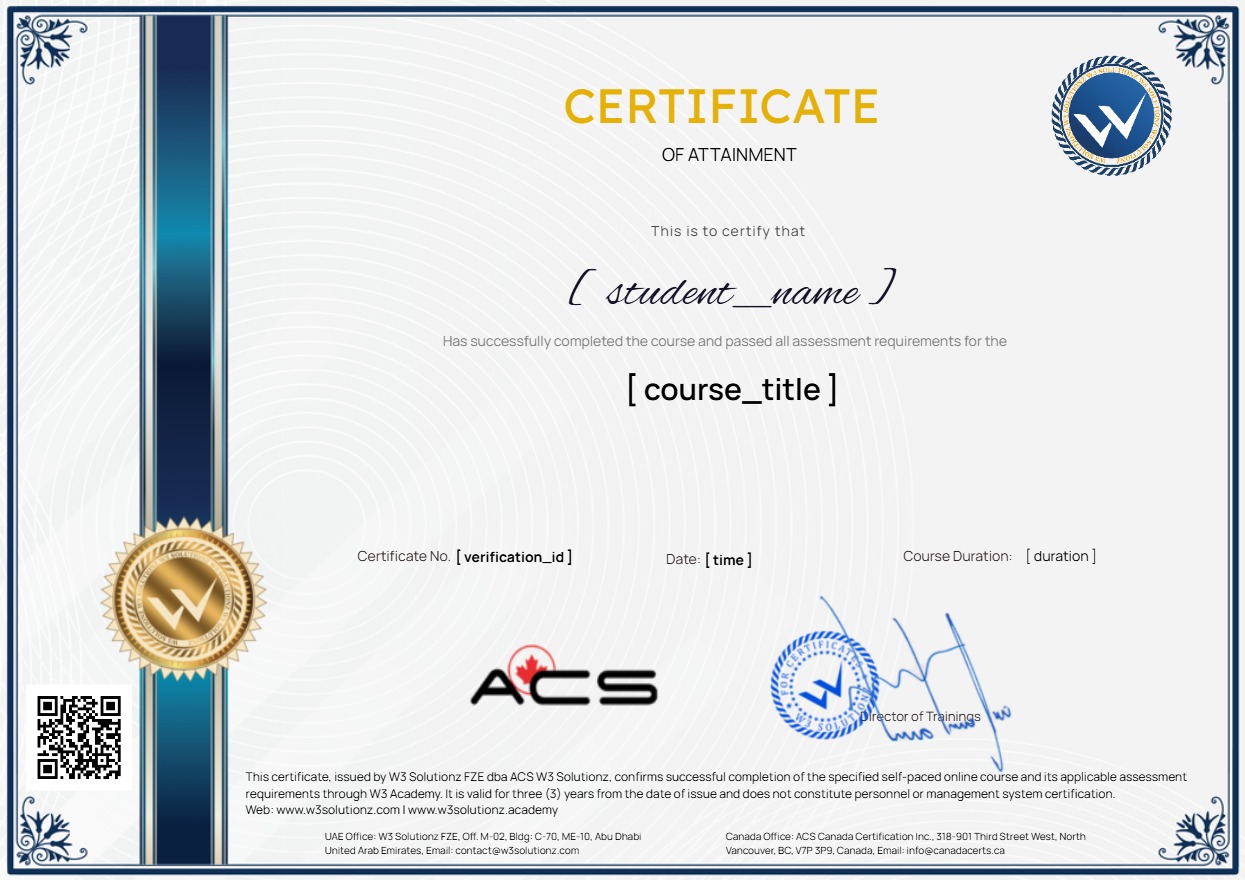
selected template

Student Ratings & Reviews

No Review Yet
No Review Yet

Want to receive push notifications for all major on-site activities?

✕