
Skip to content
W3 SolutionzACADEMY

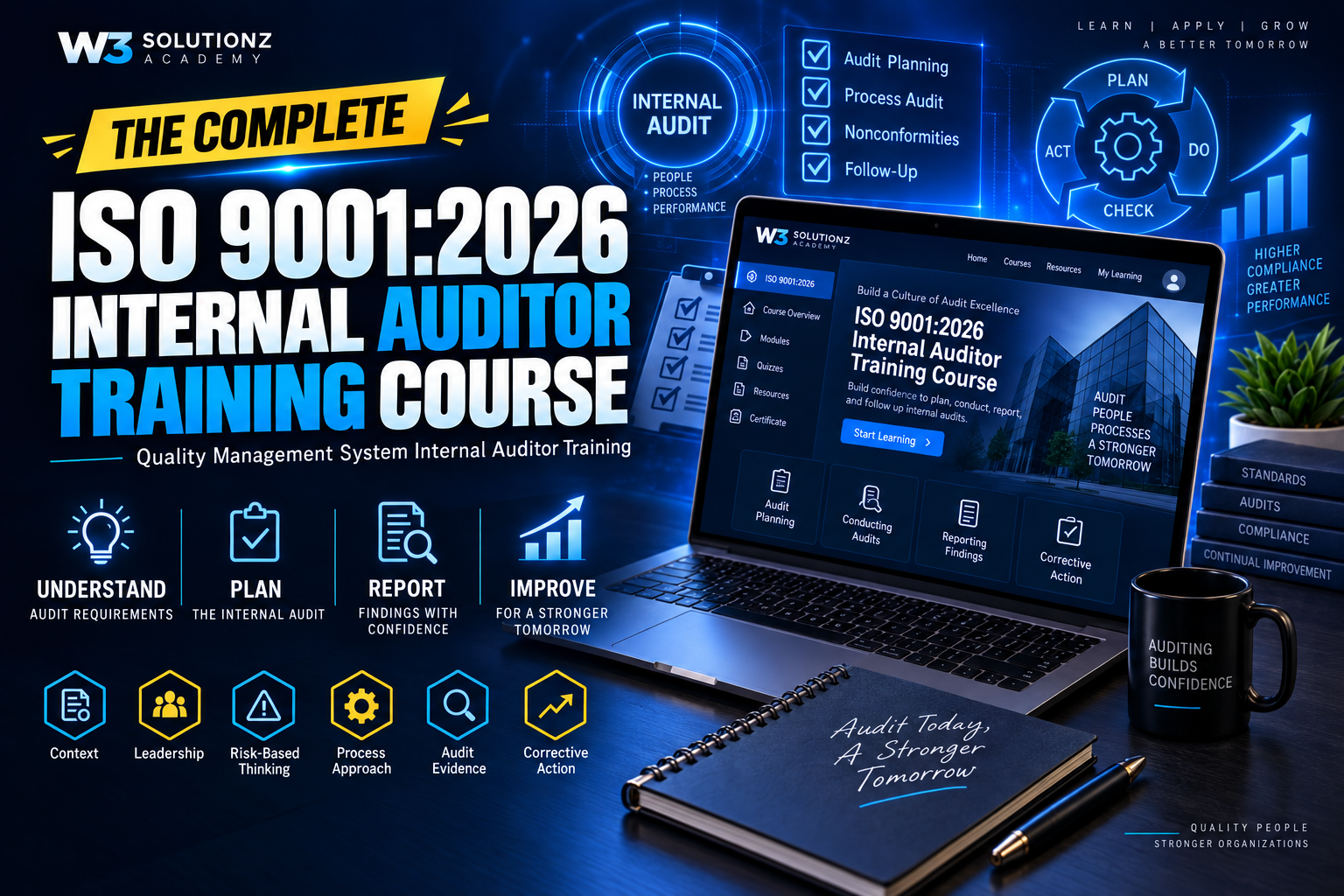
ISO 9001:2026 Quality Management Systems Internal Auditor

Wishlist Share

Share this course

Help a colleague take their next step.

About Course

Develop practical internal audit skills through 12 modules, 36 complete text lessons and 36 applied exercises with model feedback. Cover QMS clauses 4–10, the published 2026 revision themes, audit planning, sampling, interviews, evidence, findings, reporting and corrective-action follow-up. Includes a 40-question examination and a marked audit case. Total learning time 14 hours, excluding breaks.

What Will You Learn?

  • LO01: Explain QMS processes and distinguish published requirements, guidance and audit criteria.
  • LO02: Audit context, scope, leadership, quality culture, risks, opportunities and objectives.
  • LO03: Evaluate resources, measurement, competence, knowledge and documented information.
  • LO04: Trace customer requirements, design, suppliers, delivery and release controls.
  • LO05: Interpret performance and assess management review, improvement and audit effectiveness.
  • LO06: Apply audit principles, objectivity, confidentiality and competence safeguards.
  • LO07: Prepare a risk-based programme, document review and individual audit plan.
  • LO08: Develop process questions, justified samples and opening-meeting arrangements.
  • LO09: Use interviews, observation and digital evidence to obtain traceable facts.
  • LO10: Evaluate and classify evidence and write defensible nonconformities.
  • LO11: Report conclusions and verify correction, cause-based action and effectiveness.
  • LO12: Complete an integrated audit case and plan supervised workplace practice.

Course Content

QMS foundations and the 2026 edition
Explain the QMS, process approach and confirmed 2026 changes.

  • Start here: become a practical internal auditor
  • Quality, processes and PDCA
  • ISO 9001:2026 and the audit criteria

Context, leadership and planning
Audit context, customer focus, quality culture, risks, opportunities and objectives.

Support and documented information
Audit resources, measurement, competence, knowledge and document control.

Operational control and customer requirements
Follow contracts, design, external providers and controlled delivery.

Performance, improvement and internal audit
Evaluate results, management review, corrective action and the audit programme.

Audit principles, competence and ethics
Apply objective, confidential and evidence-based auditing.

Audit programme and preparation
Develop a risk-based programme, document review and individual audit plan.

Checklists, sampling and opening meetings
Prepare process questions, select samples and launch the audit.

Interviews, observation and evidence
Practise questioning, triangulation and remote audit techniques.

Findings and nonconformity writing
Distinguish evidence from inference and write defensible findings.

Reporting, corrective action and closure
Present conclusions and verify corrective-action effectiveness.

Integrated audit simulation and workplace application
Complete an audit rehearsal and plan supervised workplace practice.

Assessment